
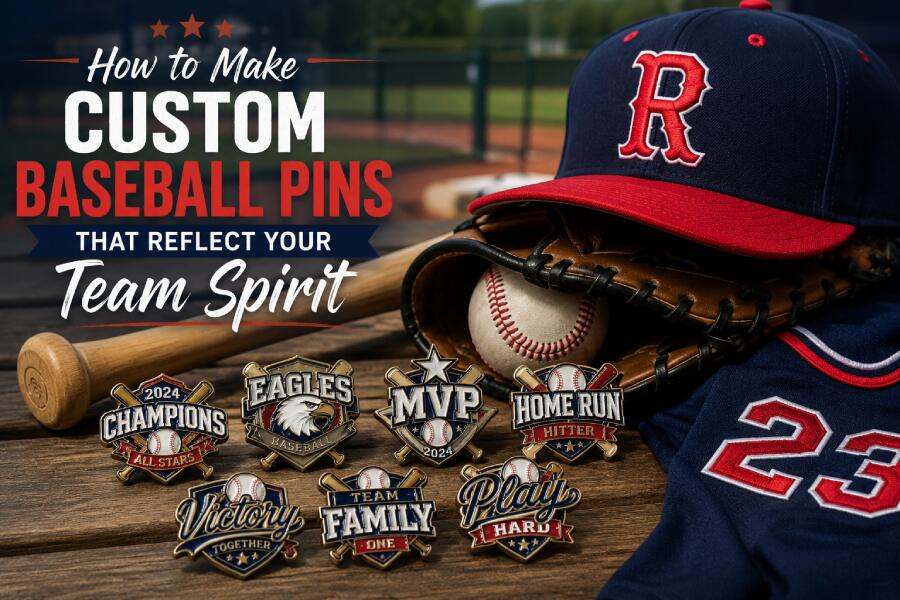
How to Make Custom Baseball Pins That Reflect Your Team Spirit
Between games at any baseball tournament, you’ll see it: players walking up to strangers from other teams, pointing at a pin on someone’s lanyard, and asking to trade. It happens fast, and it happens a lot. A pin that stands out gets picked first. One that looks rushed or generic usually stays on the lanyard the whole weekend.
This isn’t only a tournament thing, either. Clubs and school teams order the same kind of pins as badges, just worn on a jacket or bag instead of traded between innings. Either way, the process of getting one made is the same, and it’s simpler than most people expect.
What to Decide Before You Design Your Pin
Start with what already defines your team: your name, your colors, your mascot, and maybe the tournament or season you’re playing this year. You don’t need a finished design to hand over. A rough sketch, a reference photo, or even a picture of last year’s pin gives a designer enough to work with.
One thing teams often get wrong is text. Pins are small, usually under two inches, so a long team name or a slogan crammed on top of a logo gets hard to read once it’s actually made. If your name is long, simplify it or drop the tagline altogether.
It also helps to think about size and design together from the start. A detailed logo that looks great on paper can lose its sharpness once it’s shrunk down to fit a small pin.
Which Pin Style Actually Fits Your Team
Soft Enamel: The Go-To for Most Teams
Soft enamel is what most teams pick when ordering custom baseball pins for a tournament season. The design sits in recessed metal lines, filled with bold color, giving pins that slightly textured feel players recognize right away. It’s also the most budget-friendly option, which is why it’s the default choice for teams ordering in bulk.
Hard Enamel: A Smoother Finish
Hard enamel uses the same recessed-line technique, but the color is polished flush with the metal surface. It costs a bit more, and it holds detail a little better over time since there’s no texture to wear down with handling.
Die-Struck: Clean and Formal
Die-struck pins skip color fill entirely, relying on the metal itself for the design. They read as cleaner and more formal, which is why you’ll see them used more for club or association badges than for trading.
Which One Actually Makes Sense
The real deciding factor is how the pin will be used. If it’s getting traded and handled all weekend, soft enamel holds up well. If it’s meant to be worn as a lapel badge, die-struck or hard enamel tends to look cleaner over time.
Small Add-Ons That Make a Pin Stand Out
Extras Worth Considering
Glitter, glow-in-the-dark finishes, spinners, danglers, and sliders are the common add-ons teams choose beyond a standard flat design. Each one adds a bit to production time and cost, but each also makes a pin easier to spot on a lanyard full of similar-looking designs.
Trading Pins vs. Wearable Badges
In the US, tournament trading leans into these extras since the goal is catching someone’s eye across the field. UK teams ordering pins as badges usually skip all that, sticking with a flatter finish and no moving parts, since these get worn on uniforms instead of traded between games.
What Happens After You Submit Your Design
Reviewing Your Digital Proof
Once you submit your concept, most suppliers send back a digital proof within a few days. This is your chance to check three things closely: size accuracy, color match, and backing placement. It’s easier to catch a mistake now than after production starts.
Revision Rounds
Most suppliers allow a couple of rounds of revisions before approval, usually at no extra cost. Beyond that, some may charge for additional changes, so it helps to get the design close to right before requesting edits.
Choosing a Backing Type
- Butterfly clutch the standard option, secure and most commonly used
- Safety pin quick to attach, but less secure, especially for younger players
- Magnetic no pinholes in uniforms, though it can cost more and hold less securely on thicker fabric
Confirm your backing type before approving the proof, not after. It’s one of the most common details people forget to specify up front.
Pin Badges: UK vs US Orders
Minimum Orders and Pricing
Ordering location changes a few things. Many suppliers of custom pin badges UK teams use don’t set a minimum order at all, so clubs and schools can order exactly what they need for a single roster. Pricing is also usually shown with VAT included, so the quote is closer to what you’ll actually pay, unlike US suppliers who typically list prices before tax.
Shipping and Customs
Cross-border orders take longer. Customs handling can add a few extra days, so it’s worth planning beyond the standard production window.
A Naming Difference
There’s also a language gap worth knowing. UK buyers usually say “pin badges,” while US buyers say “trading pins.” Both terms point to the same product, just described differently by region.
How Early You Should Actually Order
Production typically takes two to three weeks, plus shipping time on top of that. It’s worth ordering earlier than it feels necessary, since revision rounds or peak-season backlogs at the supplier can push things past the original timeline.
It also helps to order a bit more than your roster size. Pins get traded or handed out faster than most people expect, and running short mid-season is more common than running long.
FAQs About Custom Baseball Pins
-
How many trading pins should I order per player?
Most teams order somewhere between 35 and 50 pins per player for a season, with local single-tournament orders running lower, around 15 to 25 per player. It’s better to round up than run short mid-event.
-
What’s the difference between soft enamel and hard enamel pins?
Soft enamel has recessed metal lines with color filled in, giving it texture. Hard enamel uses the same process but polishes the color flush with the metal for a smoother, slightly more durable finish.
-
Is there a minimum order for custom pin badges in the UK?
Many UK badge suppliers don’t set a minimum order at all, especially for soft and hard enamel pins, so you can order exactly what your team or club needs. This differs from US trading pin suppliers, who usually recommend ordering by the roster rather than one at a time.
Conclusion
Getting a pin made isn’t complicated once you break it down. Pick a concept, choose a style that fits how it’ll be used, decide on any extras, and give yourself enough time before the season starts. That’s really the whole process.
Whether it ends up traded on a lanyard or worn as a badge on a jacket, the same steps get you there. Start early, keep the design simple, and the rest takes care of itself.

I am a dedicated content creator behind CustomPinBadges.co.uk, suggesting effective tips and creative ideas about badge design and branding. I focus on delivering clear, helpful articles that guide businesses, organisations, and individuals through the world of custom pins. My aim is to simplify design choices, production processes, and trend updates of custom pins for readers. Through engaging and informative posts, I strive to inspire confident decisions and successful projects.